 Skip to main content

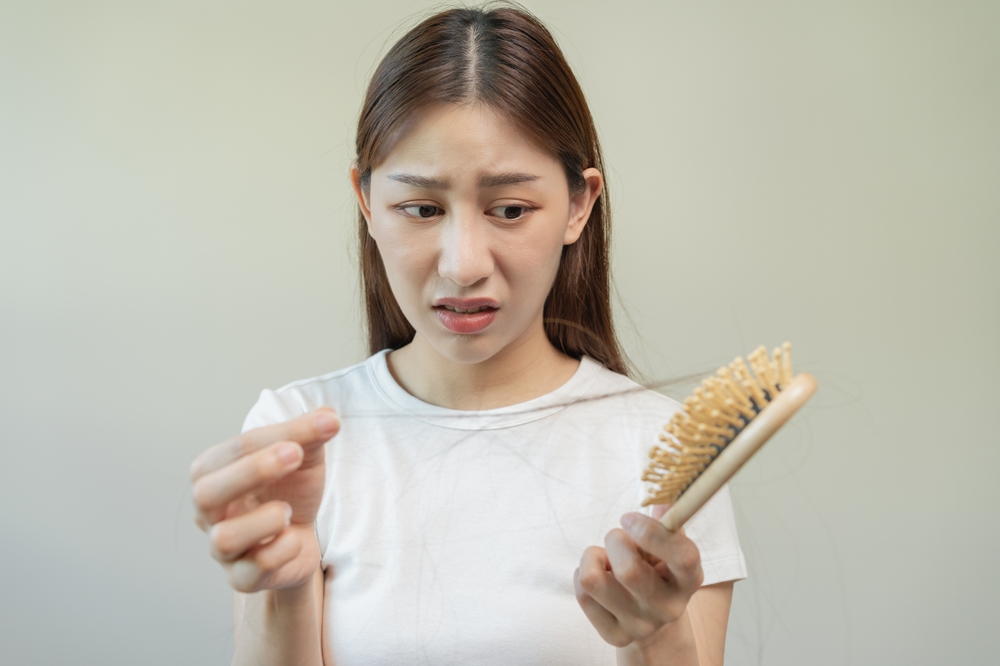
If you have ever looked at your hairbrush after styling and wondered whether you are losing too much hair, you are not alone. It is one of the most common concerns that brings people to a hair and scalp specialist, and understandably so. Hair is closely tied to identity and confidence, and any noticeable change can feel unsettling, even when the cause is entirely natural.
The good news is that not all hair loss is the same. In fact, most people who fear they are “losing their hair” are simply experiencing normal hair shedding, a natural, ongoing part of their hair’s biology. The key is understanding where normal shedding ends and where hair loss begins.
Understanding the Hair Growth Cycle
To make sense of shedding and hair loss, it helps to first understand how hair actually grows. Hair does not grow continuously; it moves through a structured, four-phase cycle that repeats throughout your lifetime.
Anagen (Growth Phase)
This is the active phase in which the hair shaft grows from the follicle. Depending on your genetics and overall health, the anagen phase can last anywhere from two to seven years. At any given time, roughly 85–90% of your scalp hair is in this phase, actively growing and receiving nourishment through the follicle’s blood supply.
Catagen (Transition Phase)
A short transitional phase lasting approximately two to three weeks. Hair growth stops, and the follicle begins to shrink and detach from its blood supply. Around 1–3% of scalp hair is in the catagen phase at any time.
Telogen (Resting Phase)
The follicle lies dormant for around three months. The hair is neither growing nor shedding; it is simply resting. Approximately 10–15% of your hair is in this phase at any given time.
Exogen (Shedding Phase)
The resting hair is released from the follicle and falls out, making way for a new strand to enter the anagen phase. This is where normal daily shedding occurs, and it is, quite literally, your hair cycle working exactly as it should.
This cycle is continuous and self-renewing. Understanding it provides the foundation for distinguishing what is normal from what warrants attention.
What Is Normal Hair Shedding?
Hair shedding is a natural consequence of the exogen phase. It is your body completing a biological cycle. Most people shed between 50 and 100 hairs per day, and this is entirely within the expected range.
You may notice shedding most clearly during everyday activities that involve interacting with your hair and scalp. These moments can make normal shedding feel more alarming than it actually is.
Hair Styling – Women
Hairstyles that place sustained tension on the scalp, such as tight ponytails, buns, and braids, create repeated mechanical stress on the follicle. Over time, this can cause scalp irritation and inflammation, which may exacerbate shedding in the affected areas. If you regularly notice more shedding after styling, try alternating between hairstyles and allowing your scalp to rest between styles.
Hair Styling – Men
Men who use styling products heavily, particularly those who apply them directly to the scalp or do not rinse thoroughly, may experience clogged pores, inflammation, and brittle or oily hair. These conditions do not cause shedding directly, but they create a scalp environment that is less conducive to healthy follicle function. Regular, thorough cleansing is important.
Seasonal Shedding
Some individuals shed more hair during autumn months, a pattern thought to be connected to changes in light exposure that affect the hair growth cycle. A temporary increase in shedding during seasonal transitions is generally considered normal and self-resolving.
After Washing or Brushing
Washing and brushing dislodge hairs that are already in the exogen phase, hairs that were ready to fall regardless. If your shower drain appears alarming after washing, bear in mind that those strands were likely due to shed anyway; washing simply releases them all at once.
Normal shedding is, by definition, temporary, distributed evenly across the scalp, and followed by new growth. When new hair replaces what is lost, the cycle is functioning as intended.
What Is Hair Loss?
Hair loss is fundamentally different from shedding.
Hair shedding means hair falls out, but it can regrow. Hair loss means hair falls out and does not return, or when it does, the regrowth is noticeably finer, weaker, and shorter than before. Over time, untreated hair loss leads to visible thinning, a more prominent scalp, or clearly defined bald areas.
In Traditional Chinese Medicine (TCM), this kind of disruption is understood through the concept of Qi, the body’s vital energy. When Qi is insufficient or blocked, the scalp and follicles are deprived of the nourishment they need to sustain healthy growth. This internal dimension of hair health is one reason why addressing root causes, rather than surface symptoms alone, tends to produce more lasting results.
How Can You Tell the Difference Between Hair Shedding and Hair Loss
The clearest way to distinguish between normal shedding and hair loss is to focus on the physical and visual signs.
The table below outlines the most telling differences:
| Normal Shedding | Hair Loss | |
| Daily volume | 50–100 strands | Consistently above 100 strands per day over several weeks |
| Distribution | Diffuse, spreads evenly across the whole scalp | Localised receding hairline, crown thinning, or defined patches |
| Regrowth | New hairs visible at the scalp | Thinning areas show little or no new growth, or regrowth is sparse and fine |
| Duration | Temporary, resolves without intervention | Persistent or progressive |
| Scalp appearance | Normal and healthy | The scalp becomes increasingly visible; patches may appear |
| Hair texture | Shed hairs are full-length and healthy | Remaining hairs become finer, shorter, or weaker over time |
A straightforward self-check: run your fingers gently through a section of dry hair and apply light pressure. Losing two or three strands is entirely normal. If you consistently pull out small clusters with minimal effort, that is worth paying attention to.
Another useful marker is your parting. If it appears noticeably wider than it did six to twelve months ago, or if your scalp is increasingly visible at the crown, these are early visual indicators of progressive hair loss rather than routine shedding.
Common Causes of Hair Loss or Excessive Hair Shedding

Understanding the underlying cause is essential before considering any treatment pathway.
The most common triggers include:
Stress
Significant physical or emotional stress, serious illness, surgery, bereavement, or prolonged burnout can push large numbers of follicles into the telogen phase simultaneously. This produces a condition known as telogen effluvium, in which shedding increases noticeably two to four months after the stressful event. In most cases, it resolves once the trigger has passed.
Hormonal Changes
Hormonal fluctuations are among the most frequent triggers for excessive shedding in both men and women. In women, significant changes occur during and after pregnancy, at menopause, and as a result of thyroid imbalances. In men, the conversion of testosterone to DHT (dihydrotestosterone) plays a central role in androgenetic alopecia (male pattern baldness), the most prevalent form of pattern hair loss.
Nutritional Deficiencies
Hair follicles are among the most metabolically demanding structures in the body; they require consistent, adequate nourishment to complete each growth cycle. Deficiencies in iron, ferritin, zinc, biotin, and vitamins D and B12 are all associated with increased shedding and reduced hair quality. Restrictive diets, poor nutritional absorption, and high physiological demands (such as during pregnancy) can compound these deficiencies.
From a TCM perspective, nutritional insufficiency links to blood deficiency, a state in which the body lacks the resources to sustain healthy hair growth. This is addressed through both dietary guidance and targeted herbal formulations.
Scalp Health
A healthy scalp is the foundation of healthy hair. Chronic dandruff, seborrhoeic dermatitis, scalp psoriasis, and folliculitis can all compromise follicle function and contribute to hair thinning over time. Product build-up, excess sebum, and blocked follicles create a scalp environment that actively works against the growth cycle. Regular scalp maintenance, not just hair maintenance, is essential.
Genetics (Androgenetic Alopecia / Pattern Baldness)
For a significant proportion of individuals, hereditary hair loss is a primary driver. Androgenetic alopecia presents as a gradual, patterned reduction in hair density: a receding hairline and crown thinning in men, and a widening parting in women. Genetics determine DHT sensitivity and the rate at which follicles miniaturise over time. A family history of early hair loss does not make it inevitable, but it does make early assessment worthwhile.
When to Seek Professional Advice
There is no need to wait until hair loss becomes severe before seeking an assessment. Early diagnosis is consistently associated with better outcomes, more options, more time, and less chance to reverse. The following signs indicate that a professional evaluation is worth pursuing:
- Shedding consistently exceeds 100 strands per day over several weeks
- Visible thinning at the crown, temples, or along the parting
- A widening parting, or a scalp that appears more visible than it did previously
- Patchy hair loss, discrete bald areas appearing suddenly (which may indicate alopecia areata)
- Scalp symptoms alongside hair loss, persistent itching, burning, scaling, or tenderness
- Hair texture that has changed noticeably, becoming finer, drier, or more brittle than before
- A family history of early hair loss and a desire to take preventive steps
It is equally important to recognise what not to do: self-diagnosing based on appearance alone, or beginning treatment without understanding the underlying cause, can delay effective resolution and in some cases worsen the condition.
How Beijing 101 Can Help
At Beijing 101, we approach hair and scalp health through the lens of both TCM and contemporary scalp science. Rather than applying a generic treatment, our specialists begin with a personalised consultation assessing your scalp condition, hair loss pattern, lifestyle, and internal health indicators to identify the root cause of what you are experiencing.
In our hair care centre, hair loss can be treated with non-invasive and TCM herbs that are designed to address both the visible symptoms and the underlying imbalances driving them. Whether your concern is excessive shedding, early pattern thinning, or persistent scalp issues, a thorough, informed assessment is always the right first step.
Take the First Step Towards Healthier Hair

If you have been noticing more hair in your brush, on your pillow, or in the shower, do not wait; you might be experiencing hair loss. The earlier you seek clarity, the more options are available to you.
Book a personalised hair and scalp consultation with Beijing 101 today. Alternatively, you can also Call: 65588101 or WhatsApp: 96405730. Our specialists will help you understand exactly what is happening and guide you towards the right next steps for your hair and scalp health.
