 Skip to main content


Hair thinning rarely happens suddenly. For many people, it develops gradually over time, making the early signs difficult to notice. Because these changes are subtle, many assume that increased shedding or slightly reduced hair volume is simply part of the normal hair cycle. In reality, shedding can sometimes signal early stages of pattern hair loss.
Hair naturally goes through cycles of growth, rest, and shedding. Losing strands each day is normal. However, hair loss is different when the overall density of the hair begins to reduce or when thinning appears consistently in certain areas of the scalp. These changes can be easy to dismiss, especially when they develop slowly.
Recognising these patterns early is important because many types of hair loss progress gradually. Conditions such as androgenetic alopecia, which is the most common cause of hair loss in women and men, often begin with subtle thinning before becoming more visible. Early awareness allows individuals to seek professional evaluation and explore suitable options for hair loss management before the condition progresses further.
Female Hair Thinning: Widening Hair Partings and Hair Loss in Women
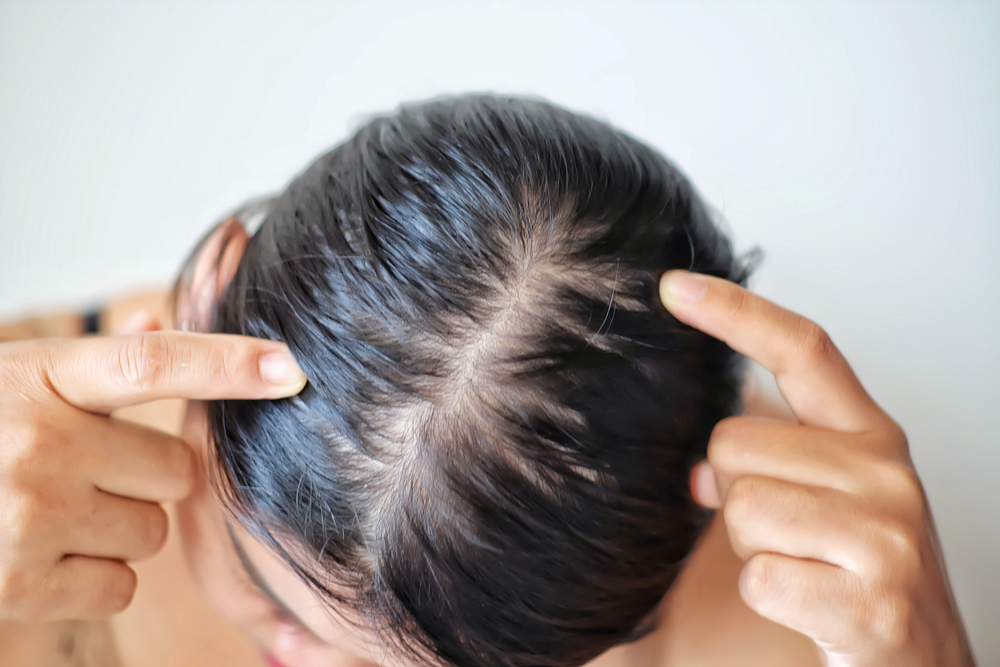
One of the earliest signs of hair thinning in women is a widening hair part. Many women first notice this change when styling their hair or looking at photographs over time. The central parting may appear broader, and your hair may seem less dense around the top of the scalp.
This pattern is commonly referred to as female pattern hair loss. Unlike male pattern baldness, which often begins with receding hairlines, hair loss in women typically appears as gradual thinning across the crown or central scalp area.
Several factors can contribute to this type of hair loss. Hormonal fluctuations, emotional stress, lifestyle changes, and scalp conditions may all play a role. In many cases, causes of hair loss in women involve a combination of factors rather than a single trigger. Over time, weakening hair follicles produce thinner strands, making the scalp more visible through the hair.
Because female pattern hair loss develops slowly, it can be mistaken for temporary shedding. However, recognising this early change on the scalp allows individuals to explore supportive care that may help maintain healthier follicle activity and support natural hair growth.
Male Hair Thinning: Receding Hairlines and Pattern Hair Loss for Men

Understanding Male Pattern Hair Loss and Androgenetic Alopecia
In men, hair loss is usually easier to recognise because it follows specific patterns. The most common form is male pattern hair loss, which is linked to androgenetic alopecia. This condition occurs when genetically susceptible follicles respond to DHT, a derivative of testosterone, gradually shrinking them over time.
Common Patterns of Hair Loss in Men
Men experiencing hair loss in the early stages often notice distinct patterns forming on the scalp.
These patterns can include:
M-shaped receding hairline
This pattern occurs when the hairline recedes from the temples, forming a shape resembling the letter “M”. It is often one of the earliest visible signs of male pattern hair loss.
O-shaped thinning at the crown
Some individuals first notice thinning at the crown area. Hair may appear less dense in the center of the scalp, creating a circular thinning pattern.
U-shaped advanced frontal hair loss
In later stages, these patterns may merge, leaving hair along the sides and back of the scalp. This progression is typical of advanced male pattern baldness.
Although these patterns may differ between individuals, they share the same underlying mechanism of follicle miniaturisation.
What’s Happening Beneath the Scalp in Hair Thinning and Hair Loss
While thinning may appear visible on the scalp, the changes actually begin beneath the surface. Hair grows from follicles embedded within the skin. Healthy follicles produce strong strands through consistent hair growth cycles.
Temporary shedding can be triggered by stress, illness, or nutritional changes and may resolve once the underlying issue improves. However, progressive conditions such as androgenetic alopecia involve gradual follicle miniaturisation that requires early attention.
Understanding what happens beneath the scalp helps explain why visible changes in your hair often appear only after the condition has already begun.
When Hair Thinning and Hair Loss Can Become Harder to Reverse
One reason early detection matters is that hair loss treatment options tend to be more effective when follicles remain active
If thinning continues for many years without intervention, the follicles may eventually become inactive.
Delayed action also allows the underlying causes of hair loss to continue affecting the scalp environment. Reduced circulation, inflammation, or hormonal influences may further weaken follicles. This is why early assessment is often recommended when noticing consistent hair thinning.
How Scalp-Focused Care Can Help Support Hair Growth
When addressing hair thinning, attention often focuses on the hair strands themselves. However, many specialists emphasise that healthy hair growth begins with a healthy scalp environment.
The scalp plays a key role in delivering nutrients and oxygen to hair follicles. If the scalp becomes imbalanced through oil buildup, poor circulation, or irritation, follicle health may gradually decline. Supporting the condition of the scalp can, therefore, be an important part of managing hair loss and thinning concerns.
Targeted scalp treatments may help improve circulation, maintain follicle health, and support stronger hair production. At Beijing 101, care focuses on non-invasive, customised scalp treatments designed to address the specific needs of each individual. By assessing scalp condition carefully, treatments can be tailored to support healthier follicle activity and overall hair health.
Recognising Hair Thinning Early Matters

Recognising gender-specific patterns such as widening hair partings in women or receding hairlines in men can help individuals identify patterns of hair loss before they progress further.
Whether the condition involves hair loss in women, male pattern hair loss, or other types of hair loss, early awareness empowers individuals to take timely action. Understanding what is happening beneath the scalp and addressing contributing factors can help support healthier hair growth over time.
If you are noticing changes in your hair or experiencing persistent thinning, consider seeking professional guidance. Book a personalised hair and scalp consultation with Beijing 101 to assess your hair loss, identify potential causes of hair loss, and recommend suitable care tailored to your needs. Early assessment can make a meaningful difference in protecting the health and vitality of your hair.
For more information on hair care and scalp concerns, please Call: 65588101 or WhatsApp: 96405730.
