 Skip to main content

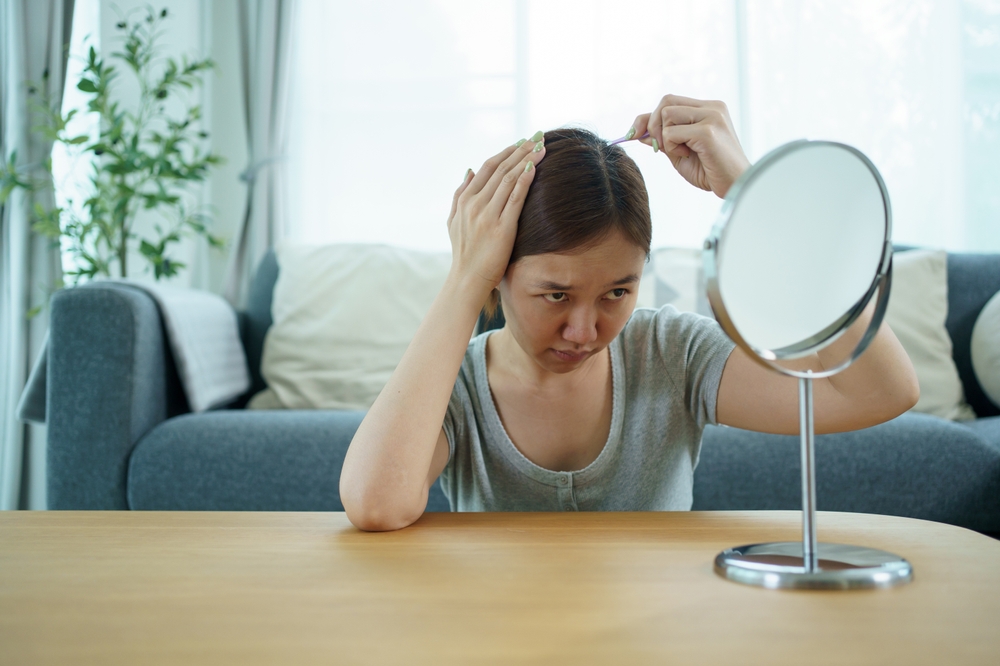
Few hair care myths are repeated as often as the warning that plucking one grey hair makes ten more grow back in its place. It is the kind of advice passed down at home, and in Singapore’s humid climate, where scalp health and hair colour are both under constant discussion, it tends to stick. But grey hair is one of the most misunderstood parts of hair care, and separating what is actually happening at the follicle from what is folklore matters if you want to look after your hair and your scalp properly. Below, we debunk four of the most common grey hair myths and explain what is genuinely worth paying attention to.
Quick Answer: Does Plucking Grey Hair Make It Worse?
No, plucking a grey hair will not make more grow back; each follicle works entirely on its own. Grey hair is driven mainly by age and genetics, though stress, poor nutrition, and smoking can all speed it up, and for most people it is simply a normal part of ageing rather than a sign of poor health. If you would rather not dye it, there are real ways to manage grey hair without colour, and if greying starts unusually early or fast, it is worth a quick word with a healthcare professional.
Does Plucking Grey Hair Make More Grow Back?
No. Each strand of hair grows from its own individual follicle, and every follicle produces and sheds hair independently of the ones around it. Plucking a single grey hair has no physical or chemical way of reaching into neighbouring follicles to switch off their pigment production, so it cannot cause “more” grey hairs to appear. If you notice several new grey hairs near one you plucked, it is coincidence, not consequence: those follicles were already on the same ageing timeline and would have turned grey regardless.
What actually happens is specific to that one follicle. Hair colour comes from melanin, produced by melanocyte cells that sit inside the follicle. Over time, and after repeated growth cycles, a follicle’s melanocyte stem cells naturally decline and eventually stop producing pigment. When a hair is plucked, the same follicle simply grows a new strand, and if that follicle’s melanin production has already slowed or stopped[1], the regrown strand comes back grey regardless of whether it was plucked or left alone. Plucking does not speed up or undo that process at the follicle level; it only removes the visible strand for a while.
That said, plucking is not entirely consequence-free: repeated plucking can cause hair thinning[1] over time, since each pluck disturbs the same follicle and, done often enough, can affect its ability to regrow at all. Occasional plucking of a handful of stray greys is a reasonable approach while greying is still minimal[2]. If grey hair is more widespread, plucking stops being a practical strategy and starts becoming a habit that stresses the scalp for no real benefit, which is where non-dye styling options or a proper scalp assessment tend to serve you better.
Is Grey Hair Caused Only by Age?
Age is one of the biggest factors, but it is not the only one. Genetics plays a major role in determining when your hair starts to grey and how quickly: family history is closely linked[2] to how early and how severely greying develops, largely because inherited genes govern how long melanocyte stem cells keep functioning in each follicle.
Stress is a real, biological contributor, not just a figure of speech: it triggers the release of norepinephrine, which causes melanocytes[1], the pigment-producing cells, to migrate out of the hair follicle. Once they have gone, that follicle can no longer produce coloured hair. Nutrition matters too: lower vitamin B12 levels are linked to premature greying[2], since B12 supports the follicle’s pigment-producing activity. Smoking is another documented factor: smokers are significantly more likely to grey prematurely[3] than non-smokers, a link researchers have since connected to the extra oxidative stress smoking places on hair follicles.
Underlying all of this is oxidative stress itself: it reduces protective proteins in the follicle[2], accelerating the decline of active, pigment-producing follicles. So while age sets the general timeline, genetics, stress, nutrition, and lifestyle habits like smoking can all move that timeline earlier.
Can Grey Hair Be Managed Without Dye?
Dyeing is a familiar option, but far from the only one. Grey hair tends to be coarser and drier than pigmented hair, partly because oil production from the scalp naturally slows with age, so regular deep conditioning treatments go a long way toward keeping it smooth rather than wiry. Purple or silver-toned shampoos are widely used to counter the yellow, brassy tones that grey and white hair can develop over time without adding any permanent colour. Since hair without melanin also has less natural protection against UV damage[2], and that matters even more under Singapore’s strong, year-round UV, using leave-in products with UV filters can help keep grey strands from becoming brittle or discoloured with sun exposure. A cut and style chosen specifically to work with grey hair, rather than against it, also makes a noticeable difference, and plenty of people are choosing to embrace their natural grey rather than manage it away at all.
For anyone whose concern is less about the colour and more about overall scalp and hair condition, a personalised scalp assessment can help identify what is actually going on beneath the surface. At Beijing 101, hair and scalp health is approached from a TCM perspective, looking at internal balance and circulation alongside external scalp care, with treatment plans built around each person’s individual assessment rather than a one-size-fits-all routine. This kind of support is aimed at overall scalp and hair health, not at reversing grey hair itself, and results vary from person to person.
Is Grey Hair a Sign of Poor Health?
For the vast majority of people, grey hair is simply a normal, genetically driven part of ageing and says nothing about overall health. Most greying follows a predictable pattern tied to family history and age, not illness.
There are, however, situations where greying that appears unusually early or progresses unusually fast is worth a closer look. Early, significant greying has been linked to factors like vitamin B12 deficiency and thyroid dysfunction[2], alongside genetics. A distinct and much rarer pattern, sudden overnight greying, has separately been linked to autoimmune conditions such as vitiligo and alopecia areata, a different phenomenon from the gradual, age-related greying most people experience. None of this means early grey hair is a cause for alarm; it simply means that if greying starts noticeably earlier than it did for your parents or accelerates quickly alongside other changes like fatigue or unexplained hair fall, it is worth taking the time to speak to a healthcare professional, since it may point to something separately treatable rather than the hair itself being the problem.
In the meantime, a personalised scalp and hair assessment with Beijing 101 can help build a clearer picture of what’s going on, alongside any medical advice you’re given.
When to Seek Professional Advice
Premature greying is shaped by genetics, stress, and lifestyle habits, and while genetics itself cannot be changed, small, consistent changes, better sleep, a more balanced diet, and reducing stress tend to matter more here than any single product. If greying appears earlier than expected or progresses quickly, especially alongside hair fall or scalp issues such as itching, flaking, or sensitivity, it is worth taking the time to speak to a professional here in Singapore, since early advice can help identify any underlying cause and guide the right next steps rather than guessing at a fix.
Grey hair is normal; plucking one strand will never cause more to appear, and how you manage it, from lifestyle habits to scalp care, matters far more than any myth suggests.
Concerned about premature greying or scalp health, or simply want a clearer picture of what your hair needs? Book a personalised hair & scalp consultation with Beijing 101, and get a professional assessment before starting any treatment.
