

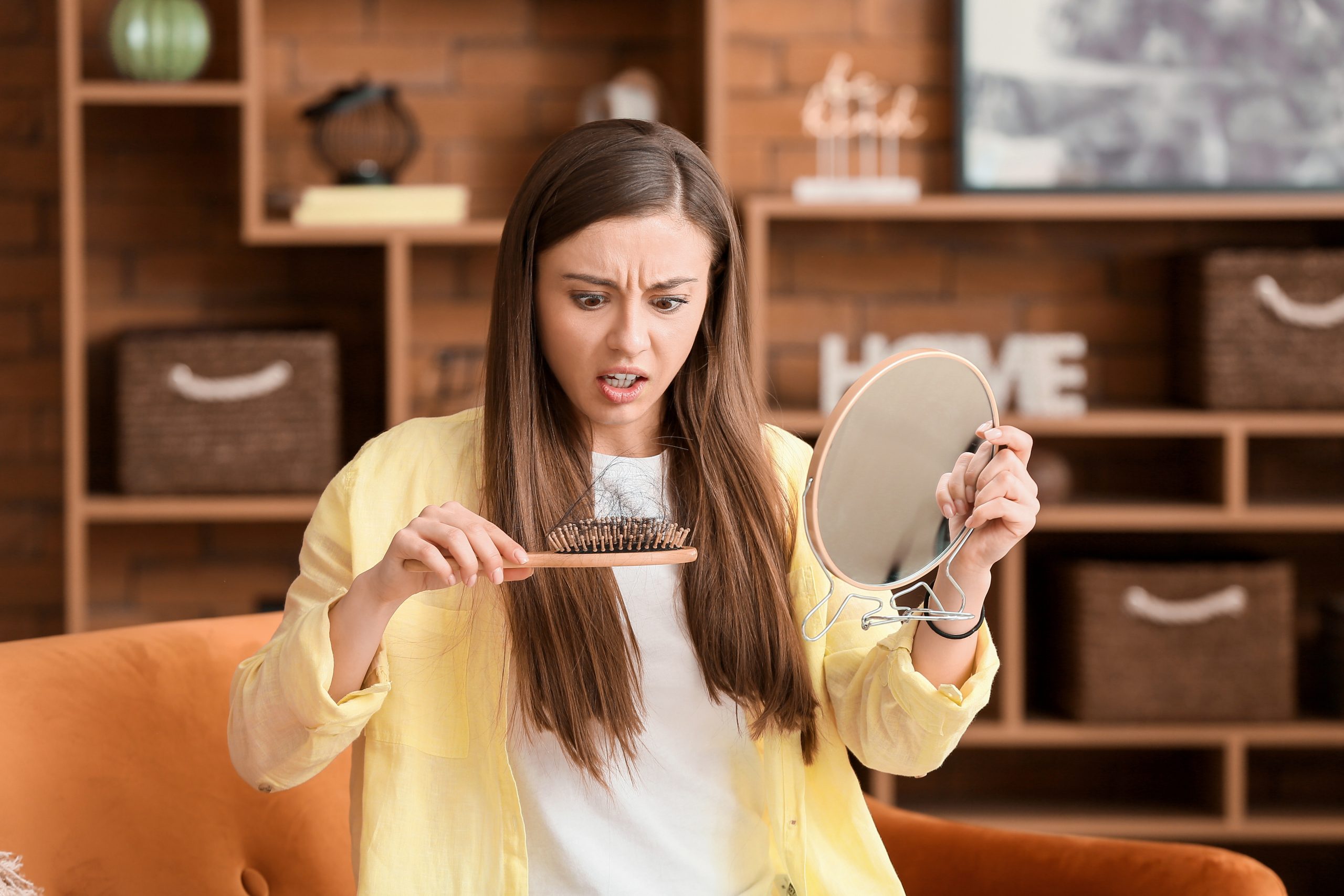
Noticed your parting looking wider, or more hair in the shower drain than usual? Hair thinning in women commonly follows hormonal shifts, such as those around pregnancy, contraceptive changes, PCOS, or perimenopause. Other common contributors include low iron stores, chronic stress, scalp inflammation, heat and chemical styling damage, poor sleep, and gradual age-related thinning. Often several overlap, so identifying the pattern matters first.
How Much Hair Thinning Is Normal?
It is normal to lose 50 to 100 hairs a day. [1] Thinning is different: your hair looks less dense over time. Two simple self-checks can help:
- Photograph your parting in the same light each month.
- Notice whether your ponytail feels thinner than it did a year ago.
A steady change is a reason to look for causes.
7 Causes of Hair Thinning in Women
Note: When we mention Traditional Chinese Medicine (TCM) terms like ‘kidney’, ‘liver’, or ‘blood’ below, we are referring to your body’s internal energy and nourishment patterns, not medical organ conditions as tested by a Western doctor. These concepts offer a TCM-based way to understand patterns related to hair and scalp health.
1. Hormonal Shifts
Thinning that worsens after a hormonal event is common. Polycystic ovary syndrome (PCOS) is the hormonal condition most often linked with female pattern hair loss [2], and both childbirth and stopping the contraceptive pill can trigger a temporary shedding episode. [3]
- Signs to watch for: You may notice thinning after stopping or changing a contraceptive, giving birth, or starting perimenopause, sometimes with irregular periods or persistent acne.
- The TCM perspective: TCM methodology links this pattern to kidney yin or liver blood deficiency, meaning your body’s replenishing reserves may not be nourishing your hair well enough.
- What you can do: Avoid starting, stopping, or switching hormonal medication on your own to help your hair. If thinning follows a hormonal change or comes with irregular periods, speak to a healthcare professional about whether testing is appropriate. Note the date of any hormonal event and when thinning began, so your doctor or consultant has a clear timeline to help you.
2. Low Iron Stores
Wondering whether lack of iron intake is behind your thinner hair? A large review of over 10,000 women found significantly lower ferritin (your body’s stored iron) in women with hair loss than in women without it. [4]
- Signs to watch for: If you feel tired all the time, have cold hands and feet, or notice a pale inner lower eyelid alongside thinning hair, low iron could be one cause. Iron can run low without full-blown anaemia.
- The TCM perspective: TCM methodology views these signs as blood deficiency, meaning too little blood is available to nourish your scalp.
- What you can do: Do not take iron products on a hunch alone. Ask a healthcare professional whether a ferritin test is appropriate first, since iron needs differ from person to person and a result shows what, if anything, is needed.
3. Chronic Psychological Stress
With stress-related hair loss, there is usually a built-in delay: shedding rises around two to three months after a stressful period, such as illness, bereavement, or a demanding year, so the trigger often seems long gone by the time hair falls. Psychological stress is a recognised trigger of this temporary, diffuse shedding, called telogen effluvium. [3]
- Signs to watch for: You may see more hair on your brush or in the shower a couple of months after a hard stretch, even once life has calmed down.
- The TCM perspective: TCM methodology reads prolonged stress as liver Qi stagnation, where the body’s energy flow becomes constrained, which is thought to affect how well your hair is nourished.
- What you can do: Try not to swap products every few weeks in response. Give your hair a few months to settle rather than judging changes week by week, and speak to a healthcare professional if shedding is heavy or lasts beyond six months.
4. Scalp Inflammation
Seborrhoeic dermatitis (a common cause of scaly, itchy scalps) and product build-up can leave the scalp inflamed or congested. How directly this affects thinning is not clear, but an unsettled scalp is worth looking after anyway.
- Signs to watch for: Frequent flaking, oiliness, or an itchy scalp that started before your thinning is a key sign to watch, especially in Singapore’s warm, humid weather.
- The TCM perspective: Through a TCM lens, this is damp-heat in the scalp, a pattern associated with oiliness, itch, and redness, which is why scalp assessment looks at your skin as well as your hair.
- What you can do: Do not scratch hard, pick at flakes, or scrub with strong products, which can irritate the skin further. Redness, scaling, pain, or severe itch deserve review by a healthcare professional.
5. Heat and Chemical Styling Damage
Frequent use of hot tools, bleaching, relaxing, and colouring can weaken the hair shaft until it snaps, which can look like thinning, particularly around the hairline and parting where tension is concentrated.
- Signs to watch for: Short broken hairs of uneven lengths, snapping partway down the shaft with dry or rough ends, suggest breakage rather than shedding from the root.
- The TCM perspective: In TCM, dry, brittle hair is linked to low Blood and Yin nourishment, meaning your strands aren’t getting enough internal moisture to stay flexible and strong.
- What you can do: Avoid layering chemical treatments close together or applying high heat to wet hair. Leave generous rest periods between services, and trim damaged ends regularly.
6. Poor Sleep Quality
Research suggests poor sleep is linked with increased hair shedding, especially because sleepless nights often go hand in hand with daily stress, which has its own effect on shedding. [5]
- Signs to watch for: If you have trouble falling asleep, wake through the night, or wake unrefreshed, alongside increased shedding, sleep may be part of the picture.
- The TCM perspective: In TCM, restless sleep is seen as your body’s deeper reserves running low. Those reserves, called the kidney pattern, are also thought to nourish your hair, so sleep and hair health are considered together.
- What you can do: Do not lean on late-day caffeine to cope with short nights, as it can worsen sleep. If sleep problems persist, speak to a healthcare professional about the underlying cause.
7. Age-Related Thinning (Female Pattern Hair Loss)
Female pattern hair loss is the most common cause of hair loss in women [6]. It happens as hair follicles become more sensitive to hormones over time, producing finer, shorter strands, and it can start well before menopause. Our guide to telling androgenetic alopecia from telogen effluvium explains the difference.
- Signs to watch for: A parting that widens gradually over years, with thinning at the crown, finer hairs, and a family history, points to this pattern, which typically spares the frontal hairline. [2] It follows a gradual course, unlike the sudden shedding after a trigger.
- The TCM perspective: From a TCM standpoint, gradual thinning with age reflects declining kidney essence (jing), the body’s deep reserve that hair is thought to reflect.
- What you can do: Do not assume it is just ageing, or cycle through products hoping one works. A progressive pattern needs a confirmed assessment before treatment.
Which Causes Are Temporary and Which Need Ongoing Management?
- Temporary shedding (stress, illness, or childbirth): This usually settles within six months once the trigger passes, and if it lasts longer, it is worth raising with a healthcare professional. [3] Hormonal and nutritional triggers, such as thyroid changes or a diet too low in protein, may also improve once the underlying issue is addressed, with regrowth typically following over several months. [3]
- Scalp-related thinning: Calming an irritated, flaky scalp helps restore a healthy environment for hair growth, and a consultation can help identify which applies.
- Progressive thinning (age-related female pattern hair loss): This needs ongoing care so a widening part does not progress to overall thinning [6]. Our female hair loss treatment guide has more.
How Beijing 101 Assesses Hair Thinning in Women
In a February 2024 Ipsos survey of 220 Singapore customers, 92% agreed Beijing 101 provides the most effective hair treatment, and every plan begins with understanding why your hair is thinning. Your assessment follows three steps:
- AI Scalp Analysis: our consultants examine your scalp condition and hair density.
- TCM Constitution Check: an assessment informed by TCM methodology, because two women with identical thinning can need different treatments.
- Personalised Care Plan: built on those findings, it may include scalp care and herbal formulations, reviewed against pregnancy, medication, and health history.
Frequently Asked Questions
What Causes Hair Thinning in Women?
Common contributors include hormonal shifts, low iron stores, chronic stress, scalp inflammation, styling damage, poor sleep, and gradual age-related thinning. If your thinning is sudden or persistent, it is a good idea to speak with a doctor. Also check thyroid function and current medication, both recognised triggers of shedding. [3]
Is Hair Thinning in Women Permanent?
It depends on the cause. Thinning triggered by stress, illness, or a hormonal event is often temporary, with most shedding settling within six months. [3] Age-related pattern thinning is progressive and needs ongoing management. A consultation can establish which type you have.
Can Low Iron Contribute to Hair Loss in Women?
Low iron can contribute to hair thinning, and iron is the most studied nutrient in this area: women with hair loss tend to show lower ferritin, a measure of iron stores. [4] Other nutritional gaps may play a part, but only a blood test can show which apply, so avoid self-supplementing and speak to a healthcare professional first.
How Can I Thicken My Thinning Hair Naturally?
Identify the cause first, since that decides what helps. Gentle handling, less heat and chemical styling, a clean, calm scalp, regular sleep, and stress management all support healthy growth conditions. Our consultants can advise on TCM-informed scalp care; results vary.
Can TCM Reverse Hair Thinning in Women?
No treatment can promise to reverse hair thinning, and we do not make that claim. We develop treatments using TCM methodology that aim to support scalp health and manage the pattern, personalised to each customer. Results vary; a consultation shows what is realistic.
Find the Cause of Your Thinning
You don’t have to guess why your hair is changing. Understanding the cause is the first step to the right care.
Book a personalised consultation with us today.
References
- American Academy of Dermatology, “Do you have hair loss or hair shedding?” https://www.aad.org/public/diseases/hair-loss/insider/shedding
- Herskovitz I, Tosti A, “Female Pattern Hair Loss,” Int J Endocrinol Metab, 2013, https://pmc.ncbi.nlm.nih.gov/articles/PMC3968982/
- Cleveland Clinic, “Telogen Effluvium,” https://my.clevelandclinic.org/health/diseases/24486-telogen-effluvium
- Skin Appendage Disorders, “Iron Deficiency and Nonscarring Alopecia in Women: Systematic Review and Meta-Analysis,” https://pmc.ncbi.nlm.nih.gov/articles/PMC8928181/
- Dermatology and Therapy, “The Intersection of Sleep and Hair Loss: A Systematic Review,” https://pubmed.ncbi.nlm.nih.gov/41535530/
- American Academy of Dermatology, “Thinning hair and hair loss: Could it be female pattern hair loss?” https://www.aad.org/public/diseases/hair-loss/types/female-pattern