 Skip to main content

A good hair consultation starts with the right questions, not a sales pitch. Too many people put off booking one because they expect a rushed pitch dressed up as advice, and that fear often keeps a hair or scalp concern unaddressed for months.
Beijing 101’s approach to a first visit goes back further than any single treatment: the TCM formula behind it was developed by Dr Zhao Zhang Guang in 1974, and more than 50 years on, the starting point is still the one he set: understand a person’s scalp and health history properly before recommending anything at all. This article explains what that standard looks like, so you know what to expect and what to ask for, wherever you go.
The Standard: What a Good Consultant Should Ask Before Recommending Anything
Whether you’re considering a hair loss consultation in Singapore at Beijing 101 or anywhere else, a proper first consultation should work through the same handful of questions before any treatment gets recommended. Here’s what a good TCM-based scalp consultation should cover and why each question matters.
Allergies and sensitivities
Ask this early, before anything else. Many TCM-based treatments involve topical herbal formulations, so a consultant needs to rule out allergies and sensitivities before suggesting any of them, not after you’ve already started.
Your core concern
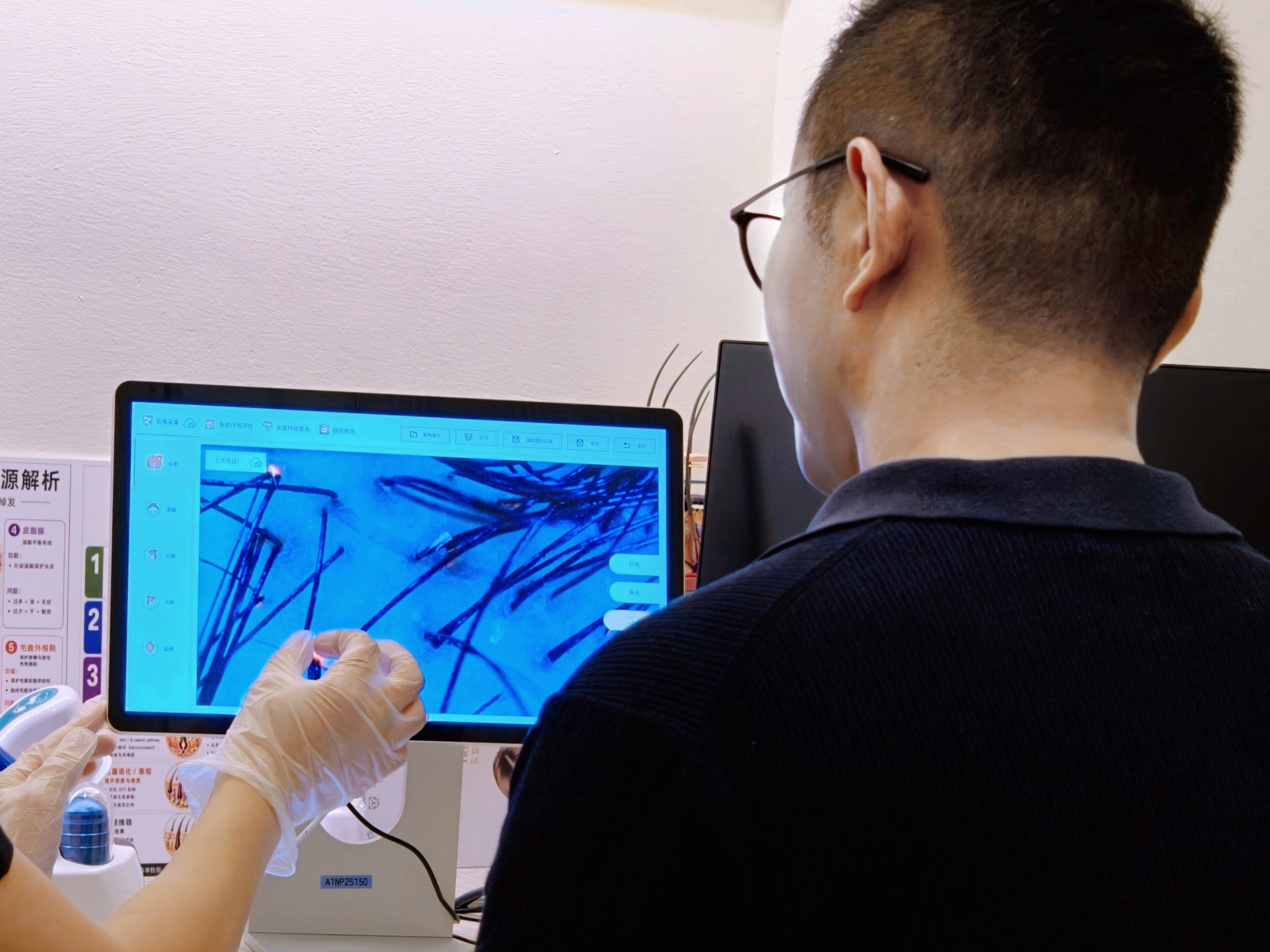
Thinning, receding, shedding, or a scalp condition like dandruff or itching are not the same problem, and a good consultant treats them differently. Beijing 101’s process starts with an AI scalp scan for exactly this reason: it turns a vague “my hair feels thinner” into a specific, visible picture that the consultant and client can discuss together, not a guess. Google reviewer Fathirah described this after a visit to the Funan outlet: “Prior to the treatment, they did a detailed scalp scan and explained my hair condition very clearly, which helped me understand my hair much better.”
Hair & scalp history
Hormonal changes, medication, and family history all affect how hair loss presents, and not every cause responds to the same kind of treatment. All three should come up before anything gets recommended, and if anything in your history points to a condition that needs medical attention – sudden or patchy loss, for instance – a properly cautious consultant will say so plainly and suggest you also consult a doctor instead of treating it as just another scalp concern. Beijing 101 also looks at this through a TCM lens: hair thinning is treated as one visible sign of a wider imbalance in the body’s Qi, not an isolated cosmetic problem, which is part of why the history questions go beyond the scalp itself. Reviewer Daisy Ye’s description of her own consultation reflects the same thoroughness: her consultant “explained hair care very clearly, and the whole process was done very carefully and meticulously,” and she added, “it was a very satisfying experience.”
What success looks like to you
Ask what a realistic timeline is and what “working” will actually look like for your specific concern. Because results vary from person to person, a good consultation is honest about a realistic timeline rather than promising a fixed outcome, and that honesty is itself a sign you’re in the right place. Reviewer Poh Shania’s trial reflects this standard: her consultant “was very patient and explained every step in detail. She was very understanding and did not hard-sell.”
What you’ve already tried
What you’ve already tried, and what happened, matters too, so you’re not paying to repeat something that already didn’t work.
Lifestyle factors
Stress, diet, and styling habits – tight buns, frequent heat styling, and harsh chemical treatments – can all contribute to hair and scalp issues, so it’s worth mentioning them even if the consultant doesn’t ask directly.
The No-Pressure Principle
The clearest sign of a good consultation is what happens when the answers don’t add up to a good fit. At Beijing 101, if your consultation doesn’t point to a treatment we’re confident will help, we’ll tell you, and there’s no obligation to book anything that day. That’s a concrete policy, not a vague reassurance, and it’s the standard worth holding any consultant to: if a “consultation” only ever ends in a hard sell, it wasn’t really a consultation.
This is also the pattern that shows up most often in genuine customer feedback. Google reviewer Xu Ting Lim, who tried a session after being approached by promotional staff, was seen by consultant Ryan and said she “appreciated his detailed explanation and service, and that he was sincere in his advice and ultimately did not hard sell.” She didn’t purchase that day, since she already had a package elsewhere, but said she would “consider coming back in the future” and would “recommend coming here to try.”
That’s what a no-pressure consultation is meant to produce: an honest answer, not a sale at any cost.
Common Questions About a First Consultation
How long does a first consultation take?
The first consultation and treatment is approximately 120 mins. Expect time for the scalp scan, a full discussion of your history and concerns, and a chance to ask your own questions, not a rushed few minutes.
Will I be pressured to buy a package on the first visit?
No, if your consultation doesn’t point to a treatment that’s a good fit, you’ll be told that directly, with no obligation to book anything.
What if I’m not sure I want treatment yet?
That’s a reasonable place to start. A consultation exists to help you understand your scalp and hair condition and your options, not to commit you to anything before you’re ready.
Do I need to prepare anything before coming in?
Not really. It helps to have a general sense of your medical history and any products or treatments you’ve already tried, but there’s nothing special you need to prepare beyond that.
What Makes a Good Hair Consultation Comes Down to What Happens Before Any Treatment Is Recommended.
If that’s the standard you’re looking for, book a personalised hair and scalp consultation with Beijing 101 and see what a proper one feels like. No pressure, just the right questions, asked in the right order.
