

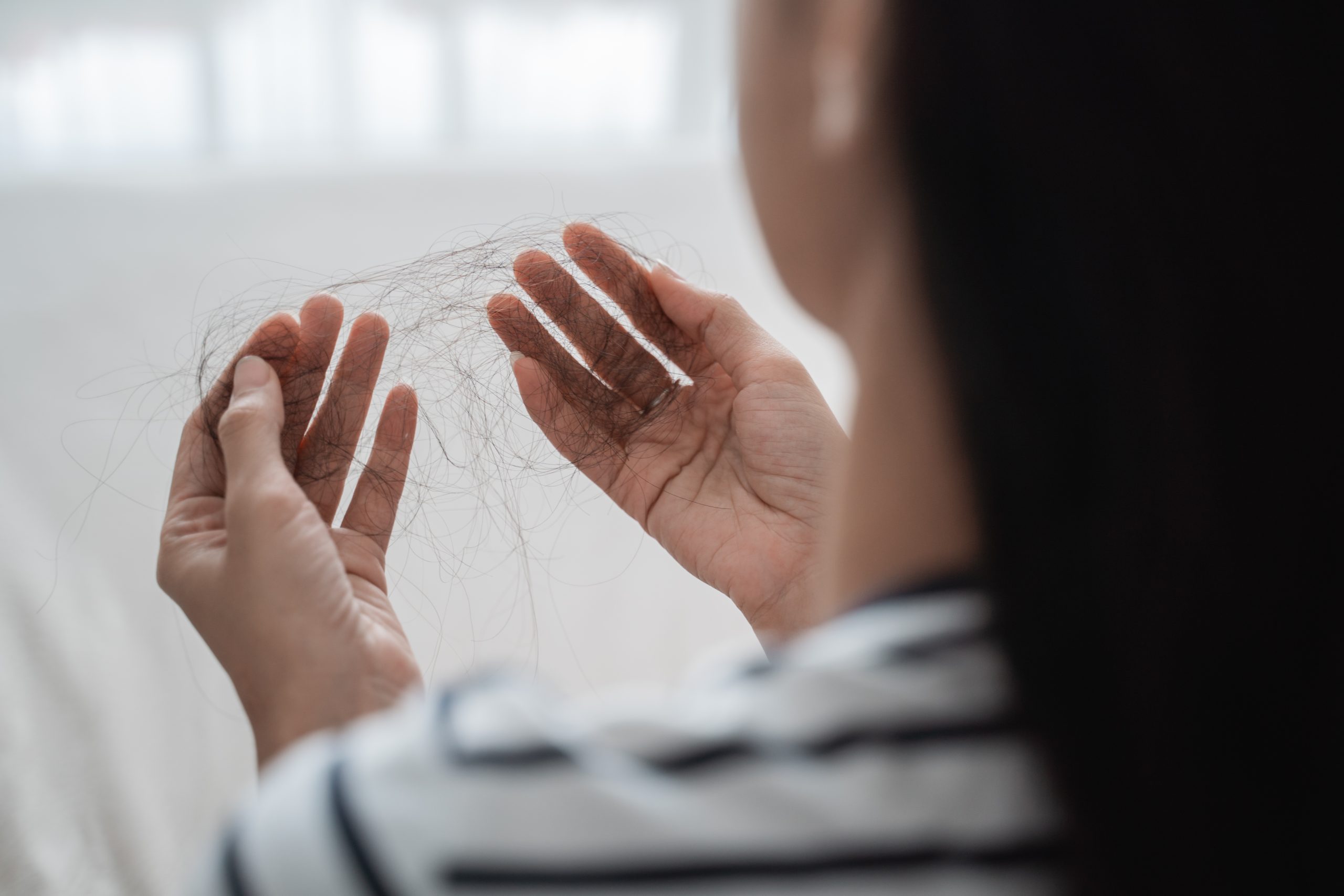
If your hair is suddenly falling out in large amounts, stay calm: sudden hair fall is often temporary. First, look back three months for a trigger such as illness, stress, or a diet change. Second, treat your scalp gently. Third, recheck at week four.
Your 30-Day Plan at a Glance
| Week | Focus | What to do | What to track |
|---|---|---|---|
| Week 1 | Find the trigger | Look back about three months for illness, medication changes, stress, diet change, or childbirth, and write dates beside each | Dates of possible triggers; comb count and drain check |
| Weeks 2 to 3 | Calm your scalp | Wash gently, pause heat styling, eat and sleep enough, wear hair loosely | Comb count and drain check on a few days each week |
| Week 4 | Reassess | Compare with week one and check for the four red flags | Rate of shedding, scalp comfort, any bald patches |
What Counts as “Sudden” Hair Fall?
Gradual thinning builds over months or years, with a wider parting or thinner ponytail. Sudden hair fall is a sharp spike within days or weeks. Losing 50 to 100 hairs a day is normal,[1] but excessive hair shedding shows up as clumps on the pillow, a comb that fills in a few strokes, or a clogged shower drain.
Three simple checks help you measure what is happening:
- Finger-pull test: gently tug a small section of hair and see how many come away. In a clinic, a provider gently pulls a clump of about 60 hairs; more than six coming away points to active shedding. A home pull cannot be measured against those clinical numbers, so treat it as a rough guide only.
- Comb count: note what collects in your comb on a few days, and whether it is rising.
- Drain check: look at what collects after a wash. Telogen effluvium can mean up to 300 strands a day, against up to 100 normally.[2]
Sudden shedding is often telogen effluvium, in which a trigger pushes many hairs into their resting phase at once, so they fall together weeks later.[2] It usually lasts three to six months, and hair grows back.[2] Our guide to telling androgenetic alopecia from telogen effluvium explains the difference in depth.
Week 1: Rule Out the Trigger
The delay is what makes triggers hard to spot: shedding tends to appear two to three months after the cause.[2] Work through this checklist, looking back about three months:
- Illness, surgery, or a high fever: all can set off delayed shedding,[3], [4] and dengue is one example readers in Singapore will recognise.
- Medication started or stopped: some prescribed medicines can contribute to shedding.[2] Never stop a prescribed medicine on your own; speak to a healthcare professional first.
- A major stressor or emotional shock: emotional stress is a recognised trigger,[4] and exam season or a family crisis can count. In TCM, prolonged stress is seen as constraining the smooth flow of Qi, the body’s vital energy, which in turn affects how well the blood nourishes the hair.
- Sudden dietary change: crash dieting and rapid weight loss are recognised triggers,[2] including a strict diet after the Chinese New Year feasting. In TCM, hair is viewed as an extension of the blood, so under-eating leaves less to nourish it.
- Childbirth: if you are postpartum, our guide to postpartum hair loss explains the pattern in detail.
Write dates beside each item; a simple timeline often reveals the trigger.
Weeks 2 to 3: Stabilise Your Scalp Environment
The aim now is a calm scalp and a steady routine:
- Use a gentle shampoo. Massage it gently into the scalp and let the rinse water carry the suds through the lengths, rather than scrubbing.[5] In Singapore’s heat and humidity a sweaty scalp can tempt you to scrub harder, so keep washing gentle.
- Pause heat styling for two to three weeks. Where you cannot avoid it, use the lowest setting,[5] and keep it to about once a week or less.
- Eat enough, and eat nourishing meals. Regular, balanced meals come first. In TCM, black sesame seeds, walnuts, and wolfberries (goji) are traditionally valued for nourishing the Blood and Kidney, the body’s reserve that hair is thought to reflect, as our guide to how stress and diet affect hair growth explains. No food stops shedding on its own, so treat these as supportive, not a remedy.
- Check suitability first. Sesame and tree nuts are common allergens, so avoid them if you are allergic. Large amounts of wolfberry have been reported to strengthen the effect of the blood thinner warfarin, so check first if you take it.[6]
- Aim for at least seven hours of sleep.[7] In TCM, settled sleep is seen as the body’s time to restore its reserves, which hair is thought to reflect.
Week 4: Assess Whether the Shedding Is Resolving
At the four-week mark, compare your comb count and drain check with week one. These three signs suggest shedding is settling naturally:
- The rate is decreasing, with fewer hairs on the comb and pillow.
- Less collects in the drain after washing.
- The scalp feels calmer, with less itch, tenderness, or flaking.
Results vary, and regrowth can take months to show. These four red flags suggest it is time to get an assessment:
- Shedding has not slowed, or is still increasing, after four weeks.
- You can see bald patches, a widening parting, or a receding hairline.[3]
- The scalp is red, scaly, painful, or persistently itchy. Conditions such as scalp ringworm can cause hair loss if left untreated,[3] so see a doctor about this, as it can need medical treatment.
- The shedding comes with unexplained weight change, since thyroid conditions and rapid weight loss are recognised triggers.[2] Speak to a healthcare professional about this, as it can need testing.
Do not wait past four weeks if any of these apply. Hair fall treatment in Singapore starts with a consultation. At a Beijing 101 consultation, our consultants examine your scalp and hair, take your timeline, and talk through what they see. Our guide to a good hair consultation explains what the first visit involves.
5 Things That Make Sudden Hair Fall Worse
- Panic-buying several hair loss products at once. Five new products in a week make it impossible to tell which helped or irritated the scalp. Change one thing at a time.
- Scrubbing and harsh handling of the scalp. Harsh hair-care products and rough handling can add breakage on top of shedding.[1] Keep washing gentle.
- Tight braids, buns, or ponytails. Constant pulling can lead to hair loss over time, so wear hair loosely while shedding is high.[8]
- High-dose biotin supplements without testing. Biotin can interfere with some blood tests, falsely lowering thyroid stimulating hormone (TSH) and raising free T3 and free T4.[9] If you take it, tell whoever orders your tests.
- Waiting more than four weeks without an assessment. With red flags present, early clarity beats weeks of guessing.
Frequently Asked Questions
Why Is My Hair Suddenly Falling Out in Large Amounts?
Sudden shedding usually follows a trigger from the previous two to three months, such as illness, surgery, a major stressor, rapid weight loss, or childbirth.[2] Work back through your timeline to find the cause, then follow the week-by-week plan above. Our guide, The Complete Hair Loss Guide for Singapore (2026), covers the causes in full.
How Do I Stop Sudden Hair Fall?
Hair that has already entered the shedding phase will fall out no matter what you do, so the goal is to calm the trigger and protect the new growth coming in behind it. Identify what changed about three months back, such as illness, stress, or a diet change, and address it. Wash gently, avoid heat styling and tight hairstyles, and eat and sleep enough so the regrowing hair stays strong. Reassess at week four, and see a doctor if any red flag appears.
How Much Hair Fall Is Normal Per Day?
Losing 50 to 100 hairs a day is normal.[1] Shedding that fills your comb in a few strokes, clogs the drain, or leaves clumps on the pillow is more than that. If it continues, follow the week-by-week plan above and recheck at week four.
Can Stress Cause Sudden Hair Fall?
Yes. Emotional stress is a recognised trigger of telogen effluvium,[4] and shedding usually appears two to three months after the cause,[2] so look back about three months. It is usually temporary and tends to settle once the cause eases.[4] If it has not eased by week four, or a red flag appears, speak to a healthcare professional.
How Long Does Sudden Hair Shedding Last?
Telogen effluvium usually lasts three to six months, and hair grows back.[2] Because shedding starts two to three months after the trigger, the clock may already be running before you notice. If shedding has not slowed by week four, get an assessment rather than waiting.
Is Sudden Hair Loss Serious?
Usually not. Most sudden shedding is temporary.[2] It deserves a doctor’s attention when it comes with bald patches, a painful or inflamed scalp, or other changes in how you feel, so do not wait if any of these appear.
Will Sudden Hair Fall Stop on Its Own?
Usually, yes. Telogen effluvium tends to settle on its own once the cause is removed.[4] A continuing trigger, such as crash dieting or tight styling, can keep it going. If shedding has not slowed by week four, get an assessment.
When Should I See a Doctor About Sudden Hair Fall?
See a doctor if you notice bald patches, a red, scaly, painful, or persistently itchy scalp, or shedding alongside unexplained weight change, as these can point to conditions that need medical testing or treatment. If shedding has not eased by week four and none of these applies, book a hair and scalp consultation with us. Our consultants assess the scalp and hair, review your timeline, and tell you plainly if what they see points to something that needs a different kind of check.
Take the Next Step in the First 30 Days
Sudden shedding is easier to manage when its cause is understood early.
A February 2024 Ipsos survey of 220 customers in Singapore found that 92% agree Beijing 101 provides the most effective hair treatment.
Book a personalised hair and scalp consultation at any of our six outlets across Singapore, and we will build a plan around your pattern. Read more about our hair loss treatment in Singapore.
References
- American Academy of Dermatology, “Do you have hair loss or hair shedding?” https://www.aad.org/public/diseases/hair-loss/insider/shedding
- Cleveland Clinic, “Telogen Effluvium,” https://my.clevelandclinic.org/health/diseases/24486-telogen-effluvium
- American Academy of Dermatology, “Hair loss: Overview,” https://www.aad.org/public/diseases/hair-loss/causes/fall-out
- SingHealth, “Hair Loss,” https://singhealth.com.sg/patient-care/conditions-treatments/hair-loss
- American Academy of Dermatology, “Hair care habits that damage hair,” https://www.aad.org/public/everyday-care/hair-scalp-care/hair/habits-that-damage-hair
- Zhang J, Tian L, Xie B, “Bleeding due to a probable interaction between warfarin and Gouqizi (Lycium barbarum L.),” Toxicology Reports, https://pmc.ncbi.nlm.nih.gov/articles/PMC5598317/
- CDC, “About Sleep,” https://www.cdc.gov/sleep/about/index.html
- American Academy of Dermatology, “Hairstyles that can cause hair loss,” https://www.aad.org/public/diseases/hair-loss/causes/hairstyles
- Health Sciences Authority, Singapore, “Biotin interference with clinical laboratory tests,” https://www.hsa.gov.sg/announcements/biotin-interference-with-clinical-laboratory-tests/