

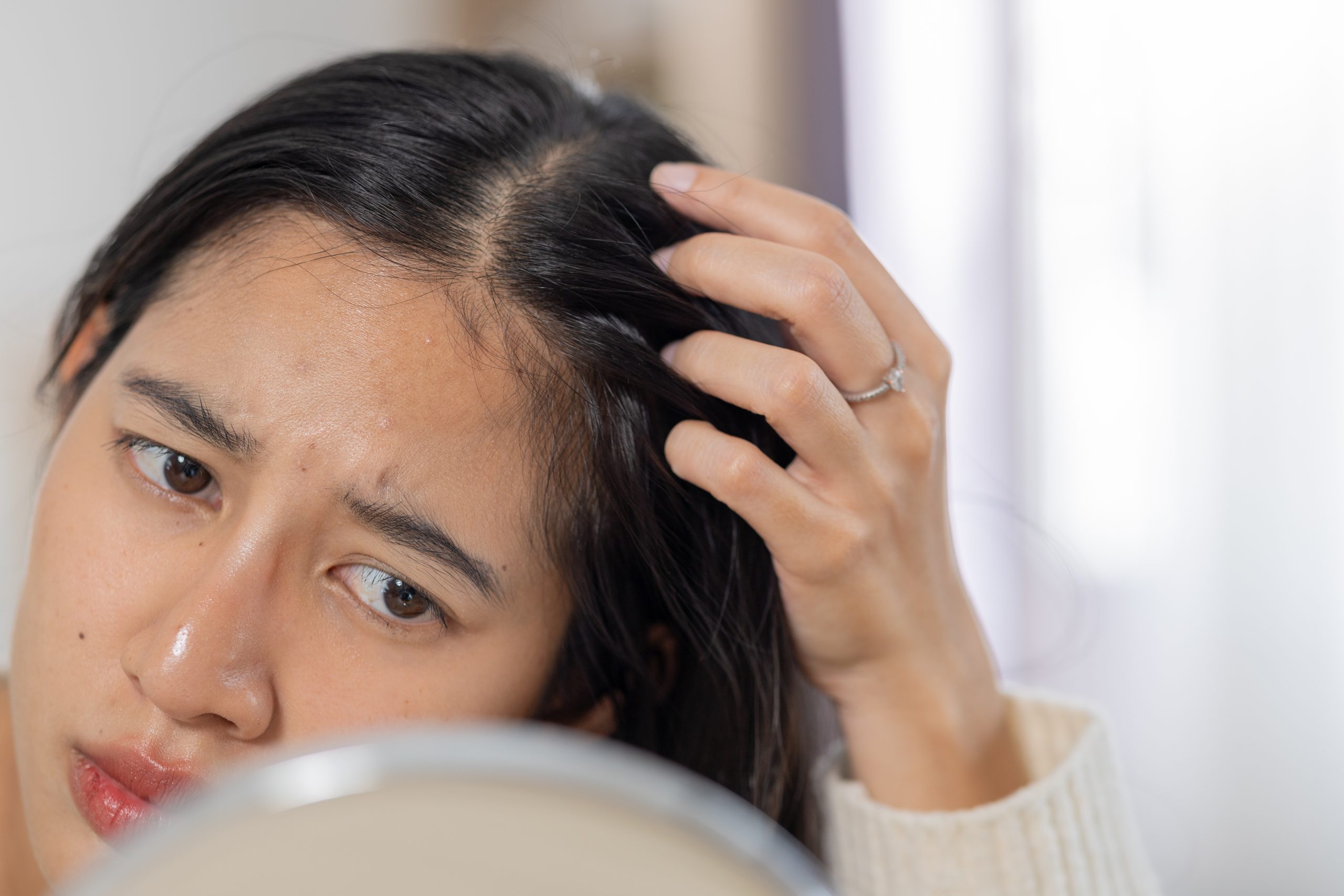
This hair loss guide for Singapore covers the main causes, how to tell the types apart, how serious your hair loss may be, and when to get help. It is written for anyone noticing more shedding or thinner hair. It is a hub, not a linear read, so jump to your section. In short, shedding 50 to 100 hairs a day is normal,[1] and most hair loss has a cause that a hair and scalp consultant can identify.
Table of Contents
- How Much Hair Loss Is Normal in Singapore?
- 12 Common Causes of Hair Loss in Singapore
- How to Identify Your Hair Loss Type
- Self-Assessment: How Serious Is My Hair Loss?
- When Home Remedies Stop Working
- What Is TCM Hair Loss Treatment? Beijing 101 Overview
- Hair Loss by Life Stage: Quick Reference
- Frequently Asked Questions
- Beijing 101: 6 Outlets Across Singapore
- Start With the Cause of Your Hair Loss
- References
How Much Hair Loss Is Normal in Singapore?
Losing 50 to 100 hairs a day is normal, and shedding well beyond that range is called excessive shedding.[1] One heavy day means little; the pattern over several weeks matters more.
Singapore-Specific Factors
Heat, humidity, and sweat can leave the scalp oilier or itchier, and demanding schedules add stress, a recognised shedding trigger.[2] Evidence that climate itself causes hair loss is limited.
The Comb Test and Pillow Test
On an unwashed day, comb gently over a white towel and count the hairs; on waking, count those on your pillow. These are rough checks, not medical tests; repeat them over several mornings.
The 3-Week Rule
As a practical guide, if shedding stays clearly above your usual level for about three weeks, look for a cause. Triggers can take two to three months to show up,[2] so consider illness, diet, or stress.
12 Common Causes of Hair Loss in Singapore
The order below is a guide, not a measured ranking. TCM terms such as “kidney”, “liver”, and “blood” describe functional patterns, not organs as Western medicine measures them.
1. Androgenetic Alopecia (Genetic/Inherited Pattern Hair Loss)
Inherited pattern hair loss is the most common cause of hair loss worldwide.[3] The genes cause follicles to shrink,[3] often showing as a receding hairline or crown thinning in men and a widening part in women. In TCM terms, this pattern is linked to declining kidney essence, the body’s deep reserve. Men tend to see better results when they start treatment soon after noticing loss,[4] so do not wait for obvious bald areas. Read how androgenetic alopecia differs from telogen effluvium.
2. Telogen Effluvium (Stress-Triggered Hair Loss)
Telogen effluvium is one of the most common causes of hair loss in women, though anyone can develop it.[2] It is a temporary shedding that typically begins two to three months after a trigger such as illness, stress, or crash dieting.[2] TCM reads stress as constrained Qi, the body’s vital energy flow. Avoid switching products every week in response. Our guide to hair shedding versus hair loss explains the difference, and shedding lasting beyond six months deserves a check-up with a hair and scalp consultant.
3. Nutritional Deficiency
Too little iron, zinc, biotin, or protein can cause noticeable hair loss.[3] A meta-analysis of 36 studies found lower ferritin, a marker of iron stores, in women with non-scarring hair loss,[5] although the level that matters is not firmly agreed. In TCM, thin, dry hair is associated with blood deficiency. Do not supplement on a hunch, because needs differ between people and more is not always better: ask a hair and scalp consultant about nutritional deficiency first, and see how stress and diet affect hair growth.
4. Hormonal Changes
Stopping some birth control pills can cause a temporary hormonal imbalance, and polycystic ovary syndrome (PCOS) is a common cause of such imbalance.[3] PCOS is also the endocrine condition most often linked with female pattern hair loss.[6] TCM views this as kidney yin or liver blood deficiency. Avoid starting or stopping hormonal medication on your own to help your hair. Irregular periods alongside thinning are worth raising, so speak to a healthcare professional, and our female hair loss guide has more.
5. Scalp Conditions
Dandruff is itchy, flaking skin confined to the scalp, and seborrhoeic dermatitis is its more inflamed form.[7] The same review notes that seborrhoeic dermatitis is not itself associated with hair loss,[7] so flaking alone does not mean you are losing hair. Psoriasis can also appear on the scalp,[3] and scaly patches with hair loss suggest tinea capitis, a highly contagious disease.[7] TCM links oily, itchy scalps to damp-heat. Do not scratch hard or pick at flakes. Our dandruff guide helps, and persistent redness, scaling, or patchy hair loss merits seeing a hair and scalp consultant soon.
6. Chronic Stress and Poor Sleep
Stress and poor sleep tend to feed each other. A systematic review found sleep disturbance consistently elevated across several hair loss types, although the evidence is observational, so causation is not established.[8] In TCM, calm and rest are seen as nourishing the hair. Do not expect a product to offset weeks of short sleep. A steady wind-down routine, regular sleep hours, and manageable workloads are a sensible start, and emotional balance and hair growth explains more. If stress feels overwhelming, speak to your hair and scalp consultant.
7. Traction Alopecia
Tight hairstyles and repeated pulling on the scalp can cause traction alopecia, and the constant rubbing of a hat or head covering can contribute.[9] Early signs include broken hairs around the forehead and a receding hairline.[9] It can become permanent the longer it goes untreated,[9] so loosen the style early, rotate where hair is tied, and avoid pulling it tight every day, especially under hats. Our hair thinning page explains how we assess changes at the hairline, and early assessment matters.
8. Medication Side Effects
Hair loss is a possible side effect of some medicines;[3] retinoids, beta-blockers, and some medicines for depression are among those linked to shedding.[2] Never stop a prescribed medicine on your own; speak to your doctor or pharmacist first, because the medicine may matter more than the hair, and a prescriber can weigh the options for you. Bring a full medicine list to a first consultation, where hormonal changes, medication, and family history are all part of your history, so nothing is guessed.
9. Medical Conditions
Thyroid problems can cause thinning hair.[3] Alopecia areata is an autoimmune disease, linked with psoriasis, thyroid disease, and vitiligo,[10] and often appears as round or oval bald patches. Patchy, sudden, or unexplained loss can signal a treatable condition, so consult a healthcare professional for a proper assessment. TCM methodology adds a view of overall balance but does not replace medical care. See temporary versus permanent hair loss to understand how outcomes differ, and ask your healthcare professional about thyroid testing if you feel unusually tired.
10. Singapore Environmental Exposure
In Singapore, sun, humidity, and sweat can leave hair drier and the scalp oilier or itchier, but evidence linking them to hair loss itself is limited. After exercise or a commute in the heat, rinse the scalp gently, dry it properly, and avoid scrubbing hard or layering heavy oils on a sweaty scalp. TCM associates damp-heat with oiliness, itch, and redness. Dandruff in Singapore’s humidity covers the scalp side in more depth; persistent itch, redness, or pain deserves a medical review.
11. Chemical Hair Treatments
Colouring, perming, and relaxing can all damage hair.[3] Damaged hair is fragile and tends to break, and continued damage may eventually lead to thinning.[11] One chemical service at a time, with longer gaps between touch-ups, is the usual advice.[11] In TCM terms, brittle hair reflects blood and yin failing to nourish it. Our full guide to chemical hair treatments and hair loss has details. Avoid layering treatments in the same month, and leave longer gaps if hair feels dry or snaps easily.
12. Age-Related Follicle Miniaturisation
With age, hair growth slows, and at some point follicles stop growing hair, so the hair on the scalp thins.[3] Caught early, treatment helps some people regrow their hair.[3] TCM reads this as gradually declining kidney essence. Do not assume it is only ageing or cycle through products hoping one works; a healthcare professional can rule out other causes, and our guide to early signs of pattern hair loss helps you spot it, though only an assessment can separate ageing from a treatable pattern.
How to Identify Your Hair Loss Type
These patterns are a starting point, not an assessment.
Pattern Hair Loss at the Crown, Temples, or Hairline
Thinning here, or a widening part, points towards inherited pattern hair loss.[12]
Diffuse Shedding With No Pattern
Even shedding across the scalp suggests telogen effluvium.[2]
Patchy, Round, or Irregular Bald Patches
These may be alopecia areata,[10] so see a hair and scalp consultant.
Receding Hairline
This may reflect traction[9] or inherited pattern loss; see our early signs of hair loss post.
Self-Assessment: How Serious Is My Hair Loss?
This is Beijing 101’s own rule of thumb, not a medical grading or assessment.
Mild
Thinning is visible without scalp exposure, and shedding is somewhat above the usual 50 to 100 hairs a day.[1] Next: repeat the home checks and read why scalp care matters.
Moderate
The parting is wider, the scalp shows in bright light, and shedding stays high. Next: see what a first visit and trial session involves, then consider an assessment.
Severe
There are significant bald patches or near-complete loss at the crown. Next: see a hair and scalp consultant for sudden or patchy loss, and read about hair loss treatment in Singapore.
When Home Remedies Stop Working
The 3-Month Home Treatment Limit
As our own rule of thumb, not a medical standard, if three months of home care brings no change, more of the same is unlikely to help. Judge by photographs; see a hair and scalp consultant sooner for sudden or patchy loss.
Signs Biotin, Shampoos, and Scalp Oils Are Not Working
Shedding is unchanged; the parting keeps widening, new patches appear, or itching persists.
Why Professional Assessment Changes the Approach
Home products treat what you see; assessment examines pattern, scalp, history, and triggers. Earlier treatment tends to mean a better prognosis.[1]
What Is TCM Hair Loss Treatment? Beijing 101 Overview
Founded in 1974 and marking 52 years in 2026, Beijing 101 is a hair and scalp consultancy that develops treatments using TCM methodology, working with registered TCM practitioners. We view hair loss as a sign of wider imbalance, so we look beyond the symptom. In a February 2024 Ipsos survey of 220 Singapore customers, 92% agreed Beijing 101 provides the most effective hair treatment.
Scalp Analysis
Every plan starts with AI Scalp Scan Analysis, because similar thinning may require different plans.
Herbal Treatment Protocols
Our herbal formulations may feature Ginseng, Dang Gui, and He Shou Wu, reviewed against your history. Ginseng may affect blood clotting and blood sugar and may be unsafe in pregnancy.[13] Dang Gui should be avoided in pregnancy and checked against blood thinners.[14] He Shou Wu carries liver and embryotoxicity cautions, so processing and dosing matter.[15] Never self-prescribe.
Meridian Head Massage, Scalp Detox, and Technology
Our Signature Meridian Head Massage applies acupressure along meridians, which TCM associates with Qi flow. Your plan may include scalp detox care and devices such as Advanced Light Therapy, listed on our TCM x technology page.
Results Timeline
Results vary. Some customers have reported reduced shedding within the first couple of months, then gradual improvement in thinning areas; our month-by-month guide sets out what to expect.
Hair Loss by Life Stage: Quick Reference
In Your 20s
Pattern loss can start in the late teens or twenties;[4] see hair loss in your 20s.
In Your 30s
Career stress and childbirth can each change shedding.[2] See stress or lifestyle in male hair loss.
In Your 40s to 50s
Perimenopause and menopause are a common backdrop, and female pattern hair loss most often begins in midlife.[12] See female pattern balding.
Postpartum
Shedding a few months after giving birth is a recognised trigger.[3] Read about postpartum hair loss; if pregnant or breastfeeding, tell your consultant, as some herbs are unsuitable.
Frequently Asked Questions
What Is the Most Common Cause of Hair Loss in Singapore?
Inherited pattern hair loss is the most common cause worldwide, affecting men and women,[3] while telogen effluvium is one of the most common in women.[2] Which applies to you depends on your pattern, age, and recent triggers, so ask for an assessment.
How Do I Know If My Hair Loss Is Serious?
Bald patches, sudden heavy shedding, a visibly widening part, or a sore, red, or scaly scalp are reasons to act sooner. Use the self-assessment above, speak to a hair and scalp consultant about sudden or patchy loss, and book a hair and scalp consultation for pattern thinning.
Can Hair Loss Be Reversed?
It depends on the cause. Temporary shedding usually settles within months once its trigger is addressed,[2] whereas inherited patterns are managed, not reversed. We do not promise reversal. A consultation helps establish which type you have, and what is realistic; results vary.
What Is the Best Hair Loss Treatment in Singapore?
No single option suits everyone, because the right approach depends on the cause, pattern, and health history. Be wary of promised outcomes, and ask how progress is judged and reviewed. At Beijing 101, every plan is personalised after a consultation; results vary.
How Long Does Hair Loss Treatment Take to Work?
Hair grows in slow cycles, so visible change generally takes months, not weeks. Timing varies with the cause and your starting point, so judge progress by photographs over months rather than days. Our results timeline above sets out what some customers have reported.
Does TCM Work for Hair Loss?
TCM offers a different framework, viewing hair loss as a sign of wider imbalance, and we develop treatments using TCM methodology tailored to each customer. We make no promise that it suits every cause or delivers set results. A consultation shows whether it fits your pattern.
What Vitamins Help With Hair Loss?
Vitamins help only where a shortfall is the cause, and a blood test arranged through a healthcare professional shows whether that applies to you. Buying supplements without one is a guess; the nutritional deficiency section above explains the nutrients involved.
Is Hair Loss Genetic?
Often, yes. Inherited pattern hair loss usually starts later in life but can begin as early as the teens.[3] Other causes, such as stress or low nutrient levels, can occur alongside it, so family history alone does not settle the question.
At What Age Does Hair Loss Start?
There is no single age. Pattern loss can start in the late teens for some men,[4] women more often notice it from midlife,[12] and temporary shedding can happen at any age, so age alone cannot tell you the cause of your hair loss.
When Should I See a Specialist for Hair Loss in Singapore?
Speak to a hair and scalp consultant first about sudden or patchy loss, as it can signal a treatable condition. For gradual thinning, book a hair and scalp consultation; the 3-week rule and self-assessment above help you judge timing. A sore, red, or scaly scalp deserves review.
Beijing 101: 6 Outlets Across Singapore
Visit us at Bedok Mall, Causeway Point, Funan, Northpoint City (North Wing), JEM, and NEX.
Start With the Cause of Your Hair Loss
Hair loss has a cause, and finding it comes before any treatment.
Book a personalised hair and scalp consultation to understand your pattern.
References
- American Academy of Dermatology, “Do you have hair loss or hair shedding?” https://www.aad.org/public/diseases/hair-loss/insider/shedding
- Cleveland Clinic, “Telogen Effluvium,” https://my.clevelandclinic.org/health/diseases/24486-telogen-effluvium
- American Academy of Dermatology, “Hair loss: Who gets and causes,” https://www.aad.org/public/diseases/hair-loss/causes/18-causes
- American Academy of Dermatology, “What is male pattern hair loss, and can it be treated?” https://www.aad.org/public/diseases/hair-loss/treatment/male-pattern-hair-loss-treatment
- Skin Appendage Disorders, “Iron Deficiency and Nonscarring Alopecia in Women: Systematic Review and Meta-Analysis,” https://pmc.ncbi.nlm.nih.gov/articles/PMC8928181/
- Herskovitz I, Tosti A, “Female Pattern Hair Loss,” Int J Endocrinol Metab, 2013, https://pmc.ncbi.nlm.nih.gov/articles/PMC3968982/
- Borda LJ, Wikramanayake TC, “Seborrheic Dermatitis and Dandruff: A Comprehensive Review,” J Clin Investig Dermatol, 2015, https://pmc.ncbi.nlm.nih.gov/articles/PMC4852869/
- Dermatology and Therapy, “The Intersection of Sleep and Hair Loss: A Systematic Review, 2026” https://pubmed.ncbi.nlm.nih.gov/41535530/
- American Academy of Dermatology, “Hair loss types: Traction alopecia and hairstyles,” https://www.aad.org/public/diseases/hair-loss/causes/hairstyles
- American Academy of Dermatology, “Hair loss types: Alopecia areata causes,” https://www.aad.org/public/diseases/hair-loss/types/alopecia/causes
- American Academy of Dermatology, “Habits that damage your hair,” https://www.aad.org/public/everyday-care/hair-scalp-care/hair/habits-that-damage-hair
- American Academy of Dermatology, “Thinning hair and hair loss: Could it be female pattern hair loss?” https://www.aad.org/public/diseases/hair-loss/types/female-pattern
- National Center for Complementary and Integrative Health, “Asian Ginseng,” https://www.nccih.nih.gov/health/asian-ginseng
- Memorial Sloan Kettering Cancer Center, “Dong Quai,” https://www.mskcc.org/cancer-care/integrative-medicine/herbs/dong-quai
- Frontiers in Pharmacology, “Phytochemistry, pharmacology, toxicology and detoxification of Polygonum multiflorum Thunb.: a comprehensive review,” 2024, https://pmc.ncbi.nlm.nih.gov/articles/PMC11215120/